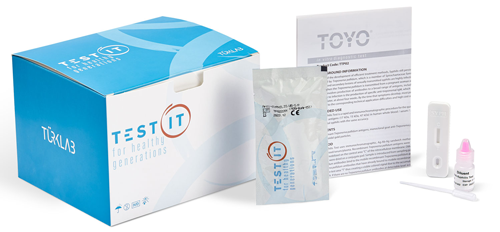
Anti-Syphilis Kit
Syphilis is a treatable sexually transmitted infection (STI) caused by the bacterium *Treponema pallidum*. *Treponema pallidum* is a Gram-negative, microaerophilic (requiring low levels of oxygen) bacterium belonging to the *Spirochaetaceae* family. It is primarily transmitted through direct contact with an active lesion; however, it can also be transmitted from mother to fetus during pregnancy or childbirth, resulting in congenital syphilis. Following exposure to the syphilis infection, the body mounts a serological response, producing both non-specific and specific antibodies against *Treponema pallidum*. Anti-*Treponema* IgM antibody levels begin to rise after the appearance of lesions associated with the infection, reaching detectable levels. Anti-*Treponema* IgG antibodies are also detectable from the fourth week of infection. Consequently, it is possible to identify anti-*Treponema* IgG and IgM antibodies in many patients following the onset of symptoms.
Intended Use:
The anti-syphilis test is an immunochromatographic assay designed for the qualitative detection of anti-*Treponema* antibodies (IgA, IgM, and IgG)—directed against *Treponema pallidum* antigens (17, 15, and 47 kDa)—in human whole blood, serum, or plasma samples. It offers high sensitivity and specificity.
Performance Evaluation:
• Sensitivity: 99.9%
• Specificity: 99.8%